Thursday, March 13, 2014

Bahrain and the GCCC: The Gulf Convenient Cooperation Council

The news of the week, not least here in Doha, is of course the rare public spat between GCC member states.  Saudi Arabia, Bahrain, and the Emirates have taken their Qatar ambassadors and gone home, which if it means three less vehicles on the roads here then I am all for it.

Notwithstanding the shock of Gulf ruling families' longstanding private dispute having been brought into the open, the move wasn't exactly unforeseen.  As early as February 18, for instance, the London-based Al-Arab published a report titled "Saudi Arabia running out of patience with Qatar and is planning to take punitive actions." It told not only of a possible suspension of diplomatic relations, but also other sanctions, including possible closure of Saudi airspace to Qatar and the suspension of trade agreements.

There is no shortage of analyses of the origins and meaning of the Gulf's newest (and this time entirely self-made) political crisis.  I will say only that, glowing post-Arab Spring statements of solidarity and impending Gulf Union aside, the six GCC states are -- gasp -- six different states guided by six different interpretations of national interest that often but not always coincide.  The Omanis are aloof, the Bahrainis do whatever the Saudis and their Abu Sa'afa oil tells them, the Kuwaitis don't really want to get involved beyond mediation, the Qataris don't need to take orders from the Saudis, and the Emiratis AHH MUSLIM BROTHERHOOD!~!!

If the Saudi-Bahraini-Emirati move was meant to put pressure on Qatar's new ruler by evoking fears among ordinary Qataris of being ostracized from the extended Gulf Arab tribe, then it would seem to have failed thus far.  For example, following an article published today in Al-Ayam by King Hamad's "Adviser for Scientific and Cultural Affairs" Muhammad Jabar al-Ansari, in which the latter writes that Qatar "will pay the price" (he also goes after Oman), the editor of the Qatari daily Al-Arab used his column today to call on the state to end its financial assistance to Bahrain as part of the so-called post-2011 "GCC Marshall Plan."

More generally, Qataris I've talked to seem moderately apprehensive but mostly annoyed.  Indeed, much more affected seem to be Saudi, Bahraini, and Emirati nationals living and working in Qatar, many of whom I've heard have been asked more or less politely by their respective governments to resign from their positions and return home. No collaboration with the enemy and all that. 

For those really interested in Qatar's possible strategic options going forward, see this piece by Simon Henderson.

More interesting from my perspective, however, is what the new political fault lines portend for Bahrain.  It is no secret that Saudi and Emirati displeasure with Qatar stems from its support of the Muslim Brotherhood, yet in Bahrain (and Kuwait; see Elizabeth Dickinson on this here) the group has long been not simply tolerated, but accepted as a legitimate political party.  More than that, it is an open secret (repeated even by the U.S. Embassy in Manama) that Bahrain's Muslim Brotherhood society al-Manbar al-Islami is bankrolled in large part by the Royal Court itself.

Remember when opponents of the Gulf Union expressed trepidation at the prospect that the political and cultural orientations of Saudi Arabia would, in the event of further integration, inevitably be imposed on the rest of the GCC member states?  Well, here we have an early example.  In Bahrain, instability born of the Muslim Brotherhood is decidedly not a domestic concern; indeed, until al-Wifaq's departure from parliament, the group represented, along with al-Asalah, one-half of the government's legislative majority whose job it was to block the opposition.  Will Bahrain now thank the society for its decade of service by declaring it an illegal "terrorist" organization?  If so, how long is popular enthusiasm for the idea of closer political ties with Saudi Arabia going to last among ordinary Bahraini Sunnis?

On the other hand, perhaps a new political witch hunt is just what the doctor ordered.  Yesterday, members of the Bahraini parliament, who since 2011 have gained a new lease on legislative life now that they need not concern themselves always with al-Wifaq, took the unprecedented step of voting to quiz the Minister of Finance, an Al Khalifa no less, for alleged financial irregularities.  Despite efforts by pro-government MPs to block the procedure, it seems that it will go forward, though a date has yet to be set.  And, in fact, those MPs that voted against the grilling are themselves being grilled (also here) on Bahrain's main Sunni (and nominally pro-government) forum.

Even more ironic than this, however, is the background to the quizzing.  From the Gulf News:
The Financial Audit Bureau report published in November detailed several financial abuses, prompting the Prime Minister Prince Khalifa Bin Salman Al Khalifa to order the formation of a committee to probe the allegations of financial irregularities.

The committee, chaired by Crown Prince and First Deputy Premier Salman Bin Hamad Al Khalifa, comprised the four deputy premiers. It sat with all ministers and addressed all the issues and loopholes mentioned in the report. The Follow-up Affairs Ministry, tasked with scrutinising the report, covered 462 cases outlined by the report and recommended referring 20 cases of non-compliance to the anti-corruption and economic and electronic security general directorate.
What this summary does not mention, however, is that the Crown Prince's unusually forceful follow-up to the National Audit Bureau report followed public outcry over the Alba corruption scandal that implicated -- wait for it -- the Prime Minister.  Thus, Khalifa bin Salman "appointed" the Crown Prince to a committee to investigate charges of corruption ... by him.

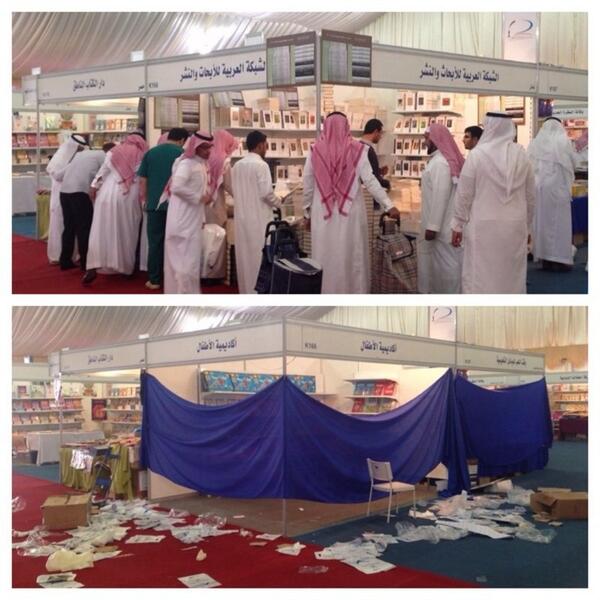
On an unrelated note, finally, I want to extend a congratulations to my colleague Toby Matthiesen for the recent publication of the Arabic version of his book, Sectarian Gulf, and also for his apparent recent acceptance into the Muslim Brotherhood. It's a shame that his Saudi-based publisher should have borne the brunt of his indiscretion, though.  Friends, don't let friends publish books on sectarian politics in Saudi Arabia:

Update: Forgot to include this.  Fred Wehrey outlines a "New U.S. Approach to Gulf Security," in which he proposes "mak[ing] Bahrain the focus of U.S. reform promotion in the Gulf."

Update 2: The Project on Middle East Democracy has sent a letter to Barack Obama "calling on him to discuss the political crisis in Bahrain during his upcoming visit to Saudi Arabia. The bipartisan letter, signed by 27 former government officials, regional experts, and security specialists, urged the Saudi leadership to play a more productive role in resolving the ongoing conflict by promoting genuine political reform in Bahrain."

Update 3: It seems that the campaign against the Muslim Brotherhood in Bahrain has already started--though it seems the government is so far content to let the UAE do the fighting. Last week Bahrain TV broadcast a program in which Dubai Police Chief Dhahi Khalfan accused Bahraini Al-Islah, the Muslim Brotherhood's social wing that shares a name with its beleaguered counterpart in the Emirates, of, among other things, "terrorism." Following the obligatory denial from al-Manbar al-Islami, the MB-affiliated writer for Akhbar al-Khaleej Ibrahim al-Shaykh has hit back, asking, "Fragmentation of the Sunni Street ... In Who's Interest?"

Tuesday, March 4, 2014

Tit for Tat in Bahrain

Only two months into the 2011 uprising, Hussein Ibish created something of a stir with an article for Foreign Policy titled, "Is Bahrain Creating a New Terrorist Threat?" Opposition activists in particular were offended by the suggestion that what was then an overwhelmingly peaceful protest movement could devolve into violence or terrorism.  Suffice it to say that Ibish likely avoided Twitter for a few days.

Of course, his question was not aimed at the integrity of demonstrators, but simply the political environment in Bahrain. "By leaving no room for peaceful dissent, " he summarized, "the Bahraini monarchy is creating the conditions for a violent revolt."

Such a thesis, I suspect, is no longer controversial, particularly following yesterday's sophisticated and premeditated attack on police in the village of Daih using a remotely-detonated bomb.  (Ugly opposition forum photos here.) While one can debate whether such an operation is best described as "terrorism" or "insurgency," given that the targets were police rather than civilians, still I think all can agree that Ibish's query is no longer rhetorical. (And we leave aside for the moment the question of Bahraini armed involvement in Syria, especially among Salafis.)

Of obvious concern is the nature of the bombing itself, which as the government has been quick to point out made use of exactly the sort of remote detonator confiscated in January on a boat apparently destined for Bahrain. At the time, the Ministry of Interior claimed that the detonators bore a "Made in Syria" label, though I have not seen this explicit connection made to yesterday's attack.

The following video, though dismissed by some as government fabrication, purports to show supporters of the group apparently responsible, the al-Ashtar Brigades, celebrating in Nuwaidrat the success of the deadly "operation" in Daih. The presence of small children certainly is not comforting.


Another unusual aspect of the case is the involvement of Emirati police personnel -- one of whom was among the dead -- in the anti-riot operation.  According to an Interior Ministry statement, the officer was in Bahrain "as part of the Amwaj Al Khaleej forces of the [GCC] Joint Security Agreement." He was not, then, part of the GCC's Peninsula Shield force, which the government continues to insist has never been involved in anti-demonstration operations (a claim supported by the BICI).

Yet the GCC joint security pact, agreed in 2012, is perhaps no less controversial.  Its terms still have not been released publicly, drawing anger and some protest among parliamentarians in Kuwait in particular.  Certainly, the presence of foreign police in Bahrain will come as an unwelcome surprise to many.

According to several people based in the Emirates with whom I've spoken, the case of the fallen UAE policeman has garnered national attention and given rise no little anti-Iranian sentiment.  Ruler of Dubai Sh. Muhammad bin Rashid has even taken to Twitter to eulogize "Tariq al-Shehi, Emirati father of four, ... martyred in Bahrain."
One wonders how this sentiment will translate into international relations.  On the one hand, one could imagine redoubled regional support for Bahrain so as to appear united in the face of ostensive Iranian-backed terrorism.  On the other hand, one might just as well expect the opposite reaction, on the part of the UAE in particular, which is to say to the Al Khalifa: you really need to get your house in order, as it's increasingly affecting the rest of us.

In this regard, the recent elevation of Muhammad bin Nayf in Saudi Arabia, now in charge of the all-important Syria portfolio, is of potential consequence.  The Interior Minister is said to be more pragmatic than his father with regard to Saudi countenance of potential Bahraini concessions to the opposition, and was even rumored to have been involved in an ultimately-abandoned plan to bring al-Wifaq representatives to discussions in Riyadh.

One really hopes that such potential sources of regional pressure or mediation pan out, because it's difficult to see how Bahrain's political-turned-armed conflict can be resolved internally.  Unless one believes that the state has so far held its punches in its dealing with the violent opposition, and that its heretofore inability to stamp out attacks such as yesterday's stems primarily from moderation in tactics, then it's not clear what else it can do to end the escalating insurgency. Arresting 'Ali Salman or 'Isa Qasim isn't going to change anything (for the better).

At the same time, despite official statements to the contrary, one has to imagine that the government views the violent street movement as almost entirely out of the sphere of al-Wifaq's influence. The state has therefore little incentive to enter into serious negotiations with the group, as it cannot credibly promise to deliver what the state wants, i.e. an end to precisely this sort of bloodshed and bad publicity.

Unfortunately, an escalating tit-for-tat contest between the government and radical opposition appears already well underway.

Update: The blog Jihadology offers a detailed look at Saraya al-Ashtar.

Thursday, February 27, 2014

America's 25 Most Awkward Allies


A while back I was asked to contribute to an interesting project for Politico's new magazine on the U.S.'s uncomfortable relationships with authoritarian regimes. The resulting report, "America's 25 Most Awkward Allies," is now out, with Bahrain placed at number 8 behind only Pakistan (1), Saudi Arabia, Afghanistan, Iraq, Egypt, Equatorial Guinea, and Uzbekistan.

The list itself contains only relatively short blurbs. Click the image above for the longer article on Bahrain, titled "The Base."

Saturday, February 22, 2014

The New York Times' Hijacked Bahrain Op-Ed Efforts

Continuing in its recently-established tradition of giving credibility to misleading and/or entirely erroneous arguments about Iranian "interference" in Bahrain, on February 18 the New York Times ran an op-ed by "Bahraini entrepreneur and political commentator on Gulf issues" Sarah bin Ashoor titled "Bahrain's Hijacked Reform Efforts."  (The piece even appeared in Wednesday's print edition of the International New York Times.) While one can glean the substance of the article from the title alone, still it is noteworthy for several reasons.

First, and as noted already, it is but the latest in a string of dubious editorials on Bahrain to have appeared in the newspaper over the past six months or so.  As one gathers from the screenshot below, four of the six most recent Bahrain op-eds, dating to mid-December, promulgate the idea that Iranian (material) support for the Bahraini opposition is not only fact, but is qualitatively no different from the country's involvement in Syria and Yemen.  Only Vali Nasr, the respected scholar of Shi'i political movements, and Roger Cohen, NYT's own columnist, avoid this conflation; and only Cohen calls out (sarcastically) this Saudi-sponsored disinformation.


A glance at this list also suggests a reason for the Times' recent turn toward Bahraini government mouthpiece.  Apart from Bin Ashoor's article, the subject of each is not Bahrain per se but Iran, more particularly its ostensive efforts to destabilize the whole of southwest Asia.  The pro-Bahraini anti-Iran PR machine has thus found an unlikely ally in the pro-Israeli anti-Iran PR machine.  On the other hand, this relationship simply mirrors the newfound shared interests and evolving ties between Israel and the Gulf states generally, and so perhaps can no longer be any surprise.

The second reason why "Bahrain's Hijacked Reform Efforts" bears mention is its author. Given the timing of the article -- just 4 days after the third anniversary of the uprising -- one would expect the Times to have sought out a reputable and independent analyst to deliver an op-ed in line with its news coverage of the anniversary. This is, after all, one of the two or three weeks a year when Bahrain can expect to attract any real media coverage at all.  Instead, however, we have an obscure "commentator."

Reassuringly, I am not the only one to have been struck by this.  A blog post by one Dylan Byers at Politico describes this "suspect op-ed" and, more interestingly, its author, concluding that -- gee-whiz! -- she appears to be a random Bahraini businesswoman.  Better yet, her description as a "founding member of the London-based Gulf Affairs Forum" would seem to be more accurately stated as: a) she is the founding member of a Bahraini pro-government group; and b) she lives in London. Byers tells,
There is no evidence of the Gulf Affairs Forum's existence online. A Google search returns only the article and subsequent discussion about the article. A Nexis search returns only the original op-ed, its republication in the Times international edition, and a mention of the piece in Gulf Daily News, a Bahraini paper. In interviews with British television channels in early 2012, Ashoor was simply described as a Bahraini businesswoman.
When asked by Byers to clarify, an editor at the Times eventually explained, presumably after following up with Bin Ashoor, that,
Sarah bin Ashoor formed the Gulf Affairs Forum in 2012 to advocate for political reform in Bahrain. Though it is registered in Bahrain and members of its board are fellow Bahrainis, Ms. bin Ashoor is the leader of the organization, and she is based in London. She organized a policy forum in 2012 at which speakers included members of Parliament, business people and journalists from The Guardian, the BBC, Reuters and other organizations, and has met with officials in Britain's Foreign and Commonwealth Office and with scholars at Chatham House, a London-based policy institute.
Sure, fair enough.

The final and by far least interesting thing about the article is its content, which follows so closely King Hamad's April 2011 apologia in the Washington Times that it makes me wonder whether Bin Ashoor wrote that one as well.  The second paragraph of King Hamad's op-ed, the part right after he talks about how the demands of the opposition will be taken seriously and that the people making them definitely won't just be thrown in prison and tortured, begins, "Unfortunately, the legitimate demands of the opposition were hijacked by extremist elements with ties to foreign governments in the region."

Compare, now, Bin Ashoor's piece on Wednesday,
Over the years, Bahrain has faced an analogous cycle of events: The state pursues political and economic reforms. These efforts are then hijacked by unpopular radical Shiite Islamists supported by Iran. Eventually, the state overcomes these challenges and restores stability — sometimes at the cost of initially pursued reform efforts.
HIJACKED, you say!?  Indeed, much like the New York Times editorial page.

While we're at it, then, let me hijack Bin Ashoor's regurgitation of King Hamad to offer a Bahraini political cycle of my own, one that works equally well for the periods, say, 1971-1999 and 1999-2014.  Stop me if you've already heard it:

Bahrain promises political and economic reforms.  The reality fails to live up to the promises, or better yet -- no, seriously, tell me if this sounds familiar -- the ruler simply reneges on the initial promises. This effort at political backtrack is then hijacked by extremists who demand the promises be upheld. Since they are already politically and economically marginalized and thus have more to gain and less to lose, this latter group of truth-terrorists consists disproportionately of Shi'a.  Yet this situation is perfect from the standpoint of the state, which eventually overcomes the challenge of popular but Shi'a-dominated opposition by convincing ordinary Sunnis -- not to mention gullible newspapers -- that if it were to cave in to these terrorist demands (read: make good on things it already promised), Iran would take over Bahrain, steal the keys to the Fifth Fleet, and use American aircraft carriers to launch nuclear strikes on Israel. And all this -- and here's the key line -- sometimes always at the cost of initially pursued promised but never pursued reform efforts.

Monday, February 10, 2014

(Not) Breaking Ranks for Reform

The temporary shot of adrenaline injected into the National Dialogue by the Crown Prince's meeting with opposition leaders did not last long.  Neither, apparently, did Sh. Salman's attempted political comeback, about which I may have jumped the shark due to an untimely let up in my natural pessimism.

It seems clear now that the Khawalid have managed to commandeer what was meant to be a serious agenda, the Crown Prince nowhere to be seen with the start of bilateral talks.  Instead, the Royal Court has as usual insinuated itself into the process in order to sabotage it from within.  The Bahrain Mirror summarized the first opposition meeting with Khalid bin Ahmad as follows: "cold, negative, and [Khalid bin Ahmad] has snatched leadership of the dialogue."  Even the BBC picked up on his obstructionism.

Meanwhile, KbA's brother in the Justice Ministry followed through in late January on threats to disband the (Shi'i) Ulama Council led by Isa Qasim, charging that it was unregistered, involved in politics, and otherwise operating "outside the constitution and law."  The body now faces potential repossession of assets and other penalties unless it agrees to "regularize its status" and abstain from politics.

It is under this rather negative backdrop that al-Wifaq and the rest of the opposition societies have just submitted their "roadmap" for formally restarting National Dialogue talks. It calls for three meetings per week to speed up the process, but also a referendum on the outcome, along with equally unlikely concessions such as a parliament with "full legislative powers" and an "elected government."  Other longstanding demands, like new electoral boundaries and independent electoral commission, probably stand a better chance at agreement.

Most interesting to me, though, is the roadmap's immediate rejection by al-Asalah, which says of the opposition vision,
We do not for instance support having an elected government as there is nothing that points to it in the charter or in the constitution. The formation of the government remains an essential element within the prerogatives of HM the king and he is the one who nominates the prime minister and the ministers. ...

Our view on the government also takes in consideration the character of the Gulf Cooperation Council, and Bahrain cannot break out of the Gulf ranks.

That is why all the GCC member states seriously stand by Bahrain on this matter.
Indeed it is, and it is of course not difficult to see why other Gulf governments would not wish to see a precedent set in Bahrain.  But this is a strange sort of argument for someone meant to represent an independent political party to make.

It would seem to me that breaking ranks sits precisely atop the list of things Bahrain needs -- whether with respect to the ruling family, the GCC, or the sectarian-cum-political groupings that continue to run in circles so long as they are unable to mobilize individuals on some viable political basis.

On an unrelated note, finally, the commander in charge of the U.S. Fifth Fleet's one active carrier strike group, Rear Adm. Kevin Sweeney, has made headlines for having reportedly "reiterated [the U.S. navy's] commitment to Bahrain."  Yet, when one reads his comments, in fact he seems to go out of his way not to mention Bahrain by name, substituting instead "this region," "this area," and so on.

The Gulf Daily News quotes him as saying, for instance, “We have a full commitment to this area. ... Our presence in the region is a continuation of six-decade long commitment to stand by our partners in the region and we’ll continue to honour that commitment." But it seems to me that in these two sentences alone Sweeney spurned at least three different chances to mention Bahrain.  What it means, if anything, one can debate, but certainly this cannot be interpreted as an expression of commitment to anything other than the Gulf region generically.

Tuesday, January 21, 2014

Bahrain's Crown Prince Makes His Move—And It Might Just Work


I have a new article out at Foreign Policy on the crown prince's recent intervention in the national dialogue. More than that, though, it is about the larger political maneuver (in my view at least) being attempted by Sh. Salman vis-a-vis his royal challengers.

Update: Lost in all the attention on Sh. Salman's meeting with 'Ali Salman is a recent statement (characterized by some as a "fatwa," though I'm not sure that's correct) by Sh. 'Isa Qasim declaring that "terrorism is forbidden in Islam." According to an English translation carried in the Iranian ABNA, he said, among other things, "This is our clear and persistent word to all believers; no to terrorism. Nothing other than a nonviolent approach must be adopted while demanding reforms."

Of course, the sorts of people over whom 'Isa Qassim has religious sway are not necessarily the same individuals engaging in violent acts.  The message is probably more important for (and addressed to) the government and its Sunni support base, which continues to demand an explicit denunciation of violence from al-Wifaq, and to question why the state would agree to negotiate with "terrorists."  Thus, for instance, we have this photoshop, which would seem to summarize the opinion of the latter:
Update 2: Simon Henderson scours Robert Gates' new memoir for interesting bits on royal factionalism in Bahrain, which unfortunately seem to be relatively few. Mainly we are told what we already know, to wit:
The book recalls a February 2011 conversation in which Crown Prince Salman said "he was ready to become prime minister if asked." Yet despite describing him as "the voice of reason," Gates noted that Salman "was powerless" at the time. When visiting the island a month later, Gates "suggested to both the crown prince and king that they find a new and different role for the prime minister, who was disliked by nearly everyone but especially the Shia." Although Salman and the king responded positively to his suggestions, Gates concluded that "the royal family was split, and the hardliners had the edge."
Update 3: A pessimistic view from the BBC on the Crown Price's initiative, focusing in particular on the paradoxical role of Khalid bin Ahmad. This is in line with a notable Bahrain Mirror story that describes the first opposition meeting with the Royal Court Minister as follows: "cold, negative, and [Khalid bin Ahmad] has snatched leadership of the dialogue."

Thursday, January 16, 2014

The Crown Prince Negotiates with Terrorists

A dramatic change indeed from the recent unprecedented persecution of senior al-Wifaq leaders, with 'Ali Salman himself arrested but two weeks ago for supposed incitement to terrorism and hatred of the regime, yesterday saw a surprise meeting between Crown Prince Salman and political society leaders aimed at jump-starting the now-suspended national dialogue.

Of course, the question has never really been Sh. Salman's desire or sincerity in making a deal, but his practical ability to do so given ruling family dynamics. Perhaps the coming of 2014 -- an election year in Bahrain -- has given the government a renewed sense that the clock is ticking. Time will tell.